
Pregnancy
Benefits of eating pomegranate and dates during pregnancy: Does it really make labor easier?
Does eating dates during pregnancy speed up labor? What are the benefits of pomegranate for anemia and placental health? Scientific evidence on nutrition in the final weeks and how to facilitate childbirth.
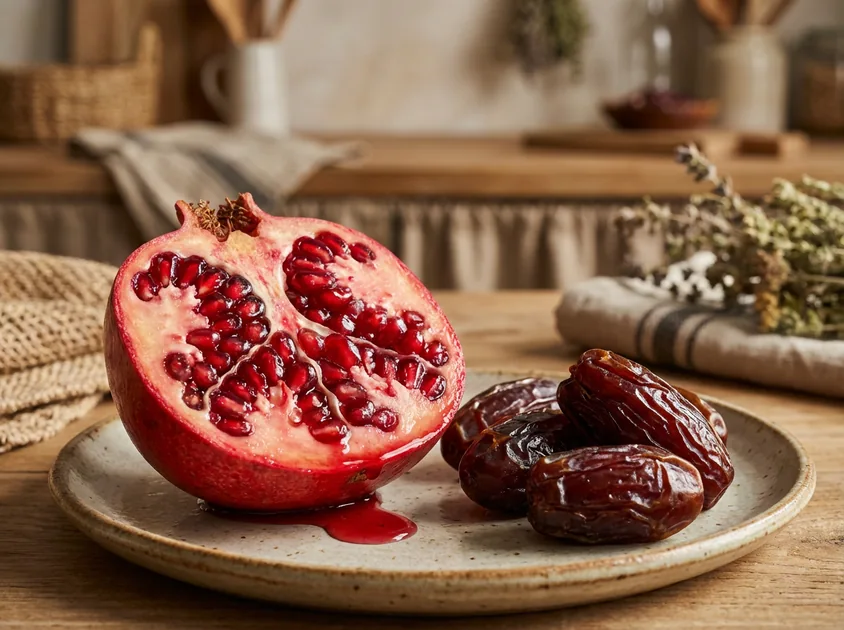
As the final weeks of pregnancy approach, every expectant mother's greatest wish is the same: *"I wish my delivery would be easy and fast"*. At this stage, the advice you most likely hear from grandmothers, neighbors, and internet forums is this: **"Eat dates, so your delivery goes smooth like oil"** or **"Eat pomegranates to increase your blood count and have strength"**.
Can pomegranates and dates, which are an integral part of Azerbaijani cuisine and culture, really be considered "superfoods" for pregnant women? Or is this just a myth? Fortunately, there are serious scientific studies conducted on this topic.
Let's explore the real effects of these two delicious fruits on the birthing process and the baby's health.Dates: Nature's "Natural Oxytocin"?
Since ancient times, dates (especially Medina dates or Iranian dates) have been used to alleviate labor pains. Modern medicine confirms this ancient knowledge.What do the scientific proofs say?
Clinical studies (e.g., *Journal of Obstetrics and Gynaecology*) show that women who eat **6 dates per day** in the last 4 weeks of pregnancy (from the 36th week onwards):1. **Cervical dilation happens faster:** The cervical dilation of women who eat dates is greater upon admission to the hospital compared to those who do not.
2. **Reduced need for artificial labor induction:** The probability of labor starting naturally increases, and the need for medical intervention (induction) decreases.
3. **Labor duration is shortened:** It has been observed that the latent phase (the initial stage of labor) lasts for a shorter period.**The Reason:** Substances in dates act similarly to the hormone oxytocin, helping uterine muscles contract more effectively. Additionally, dates are a **natural energy** source you will need during labor.Attention: Dates are high in sugar! If you have gestational diabetes, do not eat this many dates without consulting your doctor.Pomegranate: Azerbaijan's "Red Gold" and Pregnancy
Our country is a pomegranate paradise, and this fruit is a true treasure for pregnant women. While pomegranates do not have direct "labor-inducing" properties like dates, they are indispensable for preparing you and your baby for delivery.1. Iron Depot and Fighting Anemia
Anemia is a common occurrence during pregnancy. Pomegranates are rich in iron and help increase hemoglobin levels in the blood. Having strong blood counts is essential to be ready for blood loss during delivery.2. Placenta Protector
Pomegranate juice is packed with powerful antioxidants (polyphenols). Research shows that these antioxidants protect the placenta from damage and improve blood flow to the baby. This is particularly important for reducing the risk of **intrauterine growth restriction**.3. Vitamin K and Bone Health
Pomegranates are rich in Vitamin K, which is vital for both your and your baby's bones. Vitamin K is also essential for blood clotting, which is important during the postpartum recovery period.4. Against Cramps
Thanks to its potassium content, pomegranates help reduce leg cramps that may bother you at night during the final months of pregnancy.How and When to Consume?
To get the maximum benefit from these advantages, you can follow these rules: - **Dates:** 4-6 pieces per day starting from the **36th week** of pregnancy. You can consume them with walnuts, milk, or in a smoothie.
- **Pomegranate:** Beneficial during **all stages** of pregnancy. During the season, it is ideal to eat half a cup of pomegranate seeds or drink fresh-pressed juice (1 cup per day) every day.
- *Note:* Pomegranate juice can cause constipation, so do not forget to drink plenty of water. Also, those with heartburn (reflux) should be cautious.Our grandmothers were right! Science proves that dates can physiologically ease the birthing process, while pomegranates prepare your body for this process.
Of course, simply eating dates does not guarantee a painless birth, but it is a natural and delicious support tool. If you do not have sugar problems, don't forget to put a box of dates and a bottle of pomegranate juice in your hospital bag – you will also need them to restore your energy after birth!
**Want to track your nutrition?**
Download the **Anacan app** to plan your daily menu and view the "Safe Foods" list.