Pregnancy
How many of what to pack in the hospital bag for mother and baby?
Initial list showing quantities for mother, baby, and documents, adapting for C-section and twin pregnancies, emergency bag, and downloadable checklist.
Short answer: small main bag and separate emergency kit
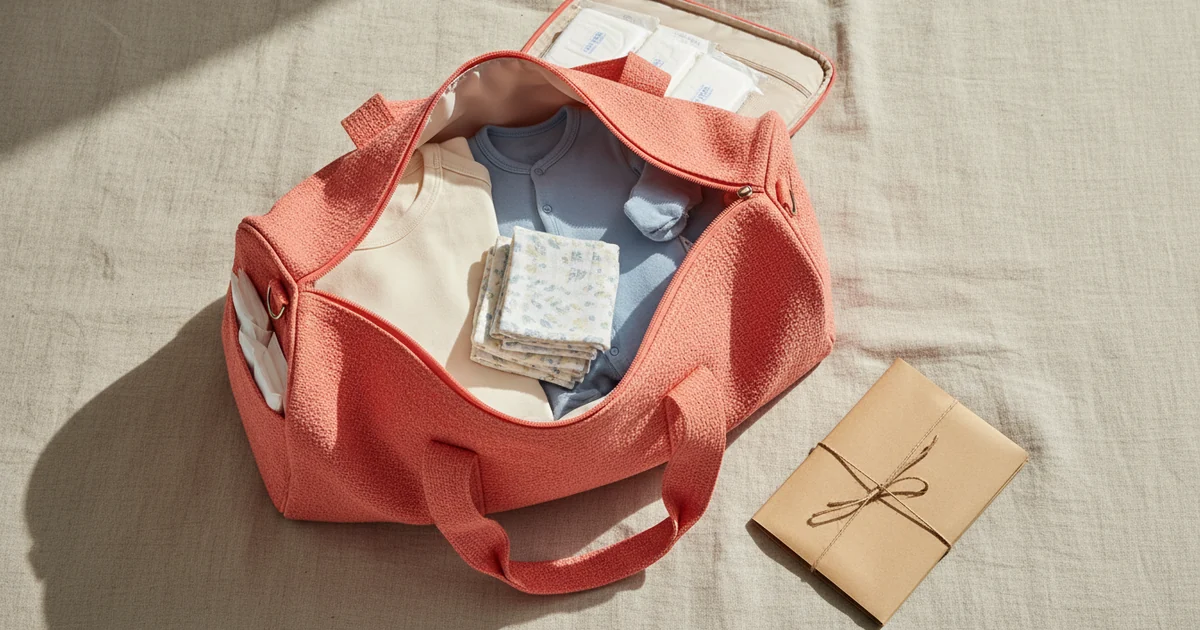
Divide your bag into separate kits for documents, mother, and baby. The quantities below are an editorial example for an initial 1–2 day stay; they are not a medical norm, a mandatory shopping list, or a requirement applicable to all hospitals. The items provided by the facility, length of stay, weather, feeding plan, and number of babies change the needs. Preparing an emergency kit that a close person can bring for additional days may be more practical than filling a large bag.
Instead of leaving the bag until the last day, plan your preparation time with the medical team. Earlier preparation may be needed for the possibility of premature birth and multiple pregnancies. Keep essential documents and contact numbers always accessible. Do not wait for the list to be completed when help is needed.
What to ask the facility first?
Ask for the hospital's own admission list: what clothing, towels, hygiene products, diapers, and feeding supplies do they provide? What documents and medication information do you need? What are the food and fluid instructions for a planned C-section? Buying all products without getting these answers can lead to duplicate expenses.
Ask about the facility's policy regarding formula and sterile feeding supplies for the baby, and your agreed-upon plan. Do not choose a formula brand or feeding method based on a single bag list. Items for special treatment or premature babies are clarified separately with the team. Do not hide your prescribed medication and the last time you took it.
Documents and easily accessible essentials
Keep documents in a waterproof and easy-to-open folder. The following are practical starting points; your country's and facility's specific document requirements are essential. Ask in advance about the policy regarding originals and copies, and do not share pictures of personal documents in public groups.
| Item | Initial quantity | Note |
|---|---|---|
| Identity and required admission documents | 1 folder | Ask if referral and insurance documents are needed |
| Pregnancy records and important test results | 1 set | Information requested by the team and birth plan |
| Medication and allergy list | 1 list | Name, dose, last intake; coordinate medications with the team |
| Phone and charger | 1 set | Keep contact numbers separately as well |
| Glasses or personal assistive device | Needed set | Items you use daily |
How many of what for the mother?
Choose soft, loose, and comfortable clothing; a front-opening nightgown is practical if it suits your feeding plan. Adjust underwear and hygiene products to your individual comfort. The number of items in two packages of pads varies by brand; do not consider the package count a guarantee for the entire stay.
| Item | Initial quantity | Note |
|---|---|---|
| Nightgown | 1–2 pieces | Loose, soft; easy to open for feeding |
| Comfortable daily and going-home outfit | 3 changes | Non-constricting size, one for going home |
| Comfortable underwear | 5–6 pieces | Disposable or washable, as suits you |
| Comfortable bra | 2–3 pieces | Nursing-friendly if desired |
| Postpartum sanitary pads | 2 pack | Highly absorbent; check quantity in pack |
| Slippers and socks | 1 pair slippers, 2 pairs socks | Non-slip, comfortable; ask about shower rules |
| Towel | 1–2 pieces | Can be reduced if provided by facility |
| Hygiene bag | 1 small set | Toothbrush, paste, comb, and personal essentials |
Initial kit for the baby
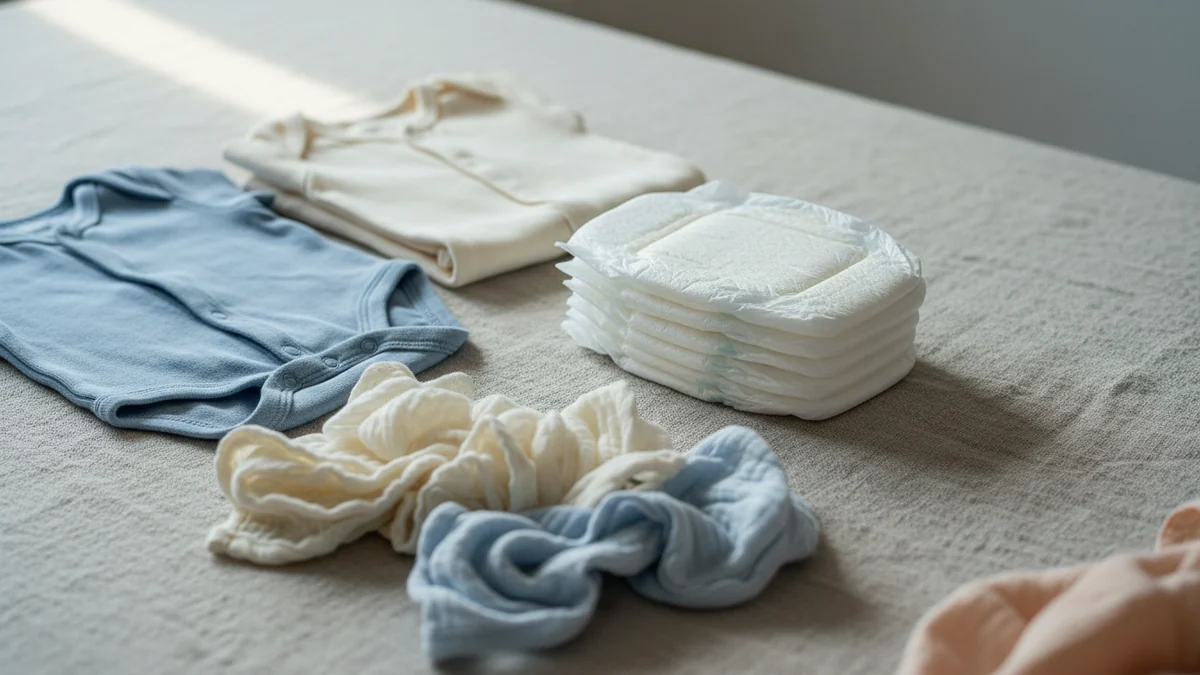
Choose clean, cotton, and easy-to-dress items; if the stay extends, have extra clothing brought. Size and thickness are adjusted to the baby and weather. The diaper package in this table is an approximate reserve, not a norm for the baby's urine and stool count.
| Item | Initial quantity | Note |
|---|---|---|
| Cotton bodysuit | 3–4 pieces | Appropriate size, easy to open |
| Onesie or comfortable baby outfit | 3–4 pieces | Spare for soiling |
| Going-home outfit | 1 set | Suitable for weather and transport |
| Diapers | 1 small pack, e.g., 20–24 pieces | Varies by facility provision and stay |
| Cotton or suitable wet wipes | 1 small set | Consistent with facility's cleaning policy |
| Muslin or soft cloth wipes | 2–3 pieces | As needed for cleaning and feeding |
| Light blanket for travel | 1 piece | Suitable for weather, keep face and head uncovered |
| Hat and socks for going outside | According to weather 1 set | Remove extra layers once indoors |
Adapting for C-section, extended stay, and twin pregnancy
For a planned C-section, clothing that doesn't constrict the abdomen and wound area, appropriate underwear, and help at home may be more important. The number of days you stay in the hospital may not be precise in advance; the condition of the mother and baby is paramount. Do not choose wound cleaning products, special dressings, and additional painkillers yourself and add them to the bag as treatment; follow medical instructions.
For twin and multiple pregnancies, consider separate clothing and diaper sets for each baby. It is not necessary to automatically multiply mother's items by the number of babies. One of the babies may stay in a special department; the team will tell you what is required there. Keep spare clothing and diapers for an extended stay in a separate bag at home, and agree on who will bring them.
Important difference for sleep and going home
A blanket taken for travel does not mean placing loose blankets, pillows, and toys where the baby sleeps. The baby should sleep on their back, on a firm, flat mattress, in a safe place with their face and head uncovered. Pillows, thick blankets, sleep nests, weighted blankets, and soft crib bumpers are not essential baby items for a hospital bag. Do not over-bundle the baby.
For discharge by car, prepare a correctly installed, rear-facing car seat suitable for the baby in advance; do not carry the baby in your arms. Avoid placing thick clothing under the harness and follow the manufacturer's instructions. Once you reach your destination, transfer the baby to an appropriate sleeping place; a car seat is not a routine sleeping bed.
Small kit for a close person and emergency bag
The person attending the birth may consider a phone, charger, personal medication, hygiene products, and a change of clothes if needed. A water bottle and light snacks may be for comfort, but your food and fluid intake are subject to medical instructions. Fasting instructions for planned surgery override snacks on the bag list.
The main bag should contain what is immediately needed for admission, and the emergency bag should have items for additional days. Pack going-home clothes in an easily accessible small kit. There is no need to bring valuable jewelry or many excess products. Show the support person where the essential documents, medication information, and phone are; do not plan for them to carry a large bag.
Download the list and track on Anacan
The PDF checklist below retains the document, mother, and baby tables from this article with the same quantities. You can download and print the list and mark what you have. Choose the version prepared for the language of the text; compare it with the facility's own admission list. The quantity column can be changed according to your individual needs.
In the Tools section of Anacan, the Hospital Bag checklist helps you mark items and see your preparation progress. The PDF of the article is a separate editorial list; the app does not automatically calculate all these quantities or check what the hospital provides. First, mark what you have, and only complete the missing and truly necessary items.
Hospital Bag: Quantified Checklist for Mother and Baby — PDF
Final check: prioritize the communication plan, not the bag
Before discharge, check documents, phone and charger, medication information, and essential mother-baby kit. Have contact information for a close person who will complete items and for birth services ready. Even if there is a planned admission date, the baby's and mother's condition can change; bag preparation does not replace the medical communication plan.
In case of possible water leakage and reduced fetal movements, contact birth services immediately. Seek emergency help for heavy bleeding, severe pain, or fainting. In these situations, do not wait for the bag to be fully packed or for suitable clothing to be found. The main goal is not to take many items, but comfortable and organized preparation.
Frequently Asked Questions
Are these quantities mandatory requirements for all hospitals?
No. These are editorial examples for an initial 1–2 day stay. What the facility provides, the length of stay, weather, and your needs vary. Ask for the hospital's own admission list.
How many underwear and sanitary pads should I take for the mother?
The initial example is 5–6 comfortable underwear and 2 pack of postpartum sanitary pads. Check the quantity in the pack; additional sets can be brought depending on the stay and usage needs. These are not medical minimums.
How many clothes and diapers are enough for the baby?
For a start, 3–4 bodysuits, 3–4 onesies, 1 going-home outfit, and 1 small pack of diapers, for example 20–24 pieces, can be considered. Adjust the quantity according to facility provision, length of stay, and number of babies.
What else should I pay attention to for a C-section?
Clothing and underwear that do not constrict the abdomen and wound area, an extra set for additional days, and a plan for help at home are beneficial. The team's individual instructions regarding food, fluids, medication, and wound care are essential.
Should I prepare the entire list twice for a twin pregnancy?
Consider baby clothing and diaper sets for each baby, but it is not necessary to automatically double the mother's items. Each baby's condition and the requirements of a special department may differ; clarify with the team.
If something is missing from the bag, should I complete it first in case of water leakage?
No. In case of possible water leakage and reduced fetal movements, contact birth services immediately. Seek emergency help for heavy bleeding, severe pain, and fainting. A close person can bring items later.