Pregnancy
Fetal Development: What Happens to Your Baby and Your Body in the 1st Trimester?
How does your baby develop in the first 12 weeks (1st trimester) of pregnancy? When can you hear the heartbeat? Learn everything about the changes in the mother's body and the miraculous journey from a single cell to a human.
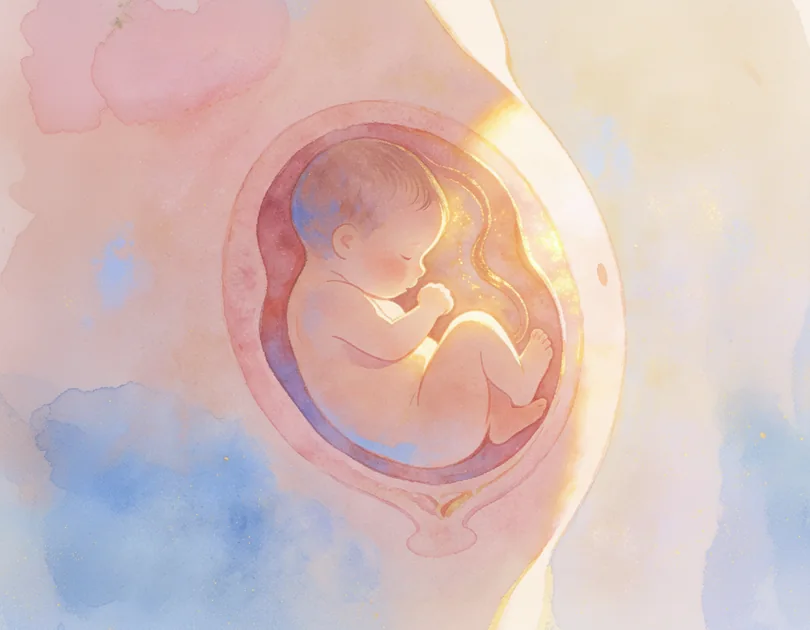
The moment you see those two lines on a pregnancy test is one of the most unforgettable moments of your life. Joy, excitement, and perhaps a little fear... All these feelings are completely normal. You may not have changed outwardly yet, but the greatest miracle of the universe is happening inside you: a new life is being created.
The first three months of pregnancy, i.e., the 1st trimester, is the most critical and rapid period for the baby's development. In just 12 weeks, a single invisible cell transforms into a miniature human with a beating heart, arms, and legs. Let's take a closer look at what happens to both your baby and your body during this magical period.
What is the 1st Trimester? (Weeks 1-12)
Pregnancy is divided into three stages (trimesters). The first trimester begins on the first day of your last period and lasts until the end of the 12th week. This period is the most important stage in terms of the formation of the baby's organs ("organogenesis"). That is why a healthy lifestyle and nutrition play a decisive role in the first months.
How is your baby changing? From a microscopic particle to a "plum-sized" baby
Month 1: Laying the Foundation (Weeks 1-4)
In the first two weeks of pregnancy, you are technically not pregnant yet (your body is preparing for ovulation). The real adventure begins after fertilization occurs.
From Zygote to Blastocyst: The fertilized egg cell (zygote) divides rapidly, moves toward the uterus, and attaches to the uterine wall (implantation).
Size: At the end of the month, your baby is the size of a poppy seed.
Key Development: The neural tube, which forms the basis of the baby's brain and spinal cord, begins to form. (See: Why is folic acid important?).
Month 2: The heart starts beating! (Weeks 5-8)
This month is the most active period of development. Your baby is now called an "embryo."
Heart: At approximately the 6th week, the baby's heart begins to beat! This can be heard on an USG (Ultrasound Examination). The heart works very fast at 100-160 beats per minute.
Facial Features: Eyes, ears, and nose begin to form.
Limbs: Arms and legs first appear as small buds, and by the end of the month, fingers begin to be seen.
Size: At 8 weeks, your baby is about the size of a raspberry or a kidney bean.
Month 3: Human Form (Weeks 9-12)
The "embryo" stage is now over, and your baby begins to be called a "fetus."
Movement: The baby begins to move, but you don't feel it yet (there's still time for that!).
Organs: All major organs (kidneys, intestines, brain) have formed and begun to function. Fingernails appear.
Gender: Genitals are forming, but it may still be too early to see on an ultrasound.
Size: At the end of the trimester, your baby is the size of a lemon or a plum (approximately 5-6 cm).
So, What is Happening in Your Body?
While your baby is growing rapidly, a "hormone storm" is occurring in your body. Although nothing is apparent from the outside yet, serious work is going on inside.
1. Fatigue and Weakness
Do you constantly feel sleepy? This is due to the increase in the hormone progesterone. Your body spends a lot of energy to create the placenta. Be kind to yourself and rest as much as possible.
2. Morning Sickness (Toxemia)
Approximately 70% of pregnant women encounter this condition. Nausea can occur at any time of the day. Extreme sensitivity to smells is also a "travel companion" of this period. (Good news: These conditions usually pass in the second trimester).
3. Breast Sensitivity
Your breasts may grow, become heavy, and be very sensitive to touch. Mammary glands are already preparing for lactation.
4. Frequent Urination
The growing uterus presses on the bladder, and increased blood circulation causes the kidneys to work more.
5. Emotional Fluctuations (Mood Swings)
It is completely normal to laugh one moment and cry the next. Hormones change brain chemistry.
Important Tips for the 1st Trimester
What should you pay attention to in order to spend this critical period healthily?
Don't forget vitamins: Take Folic acid or prenatal vitamins prescribed by your doctor every day.
Say goodbye to harmful habits: Smoking (including passive smoking) and alcohol directly harm the baby's development.
Pay attention to nutrition: Stay away from raw meat, raw eggs, unpasteurized dairy products, and high-mercury fish.
Doctor's appointment: Go for your first gynecological examination. Hearing the baby's heartbeat will give you great motivation.
Drink water: Fluid loss is high during toxemia, so try to drink plenty of water.
The first trimester is one of the most difficult yet most miraculous periods of pregnancy. Changes in your body may tire you out, but remember that every symptom is a sign that your baby is growing.
Download the Anacan app to track your baby's weekly development, see what fruit size it is currently, and record changes in your body. We are with you every step of the way on this miraculous journey!