Nutrition
10 Foods to Avoid During Pregnancy: Sushi, Raw Meat, and Other Risks
What foods should you avoid during pregnancy? Why are sushi, raw eggs, soft cheeses, and liver dangerous? A list of 10 forbidden foods to protect against listeria and toxoplasmosis.
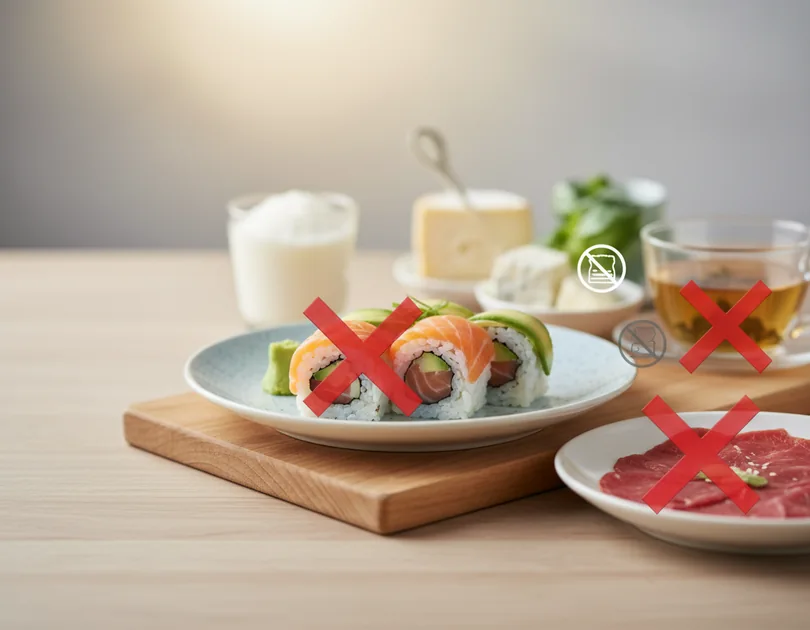
Pregnancy is the period when women most question their eating habits. On one hand, you think, "I crave it, so the baby needs it," and on the other, you fear, "Will eating this harm my baby?" Especially the richness of Azerbaijani cuisine and our love for natural village products can sometimes lead to hidden dangers.
Unfortunately, some of our favorite foods must be removed from the menu during pregnancy. The reason is simple: your immune system weakens slightly during pregnancy, and bacteria (Listeria, Salmonella) that wouldn't affect you normally can now pose a serious threat to your baby.
Let's take a look at 10 foods you should stay away from for 9 months and learn why they are on the "red list."
1. Raw Fish and Sushi (Sushi lovers, we're sorry!)
You may love Japanese cuisine, but it's essential to avoid rolls made with raw fish during pregnancy.
Danger: Raw fish can contain parasites and harmful bacteria.
Alternative: You can eat sushi that is fully cooked (e.g., "tempura" or cooked salmon) or made with vegetables (avocado, cucumber).
2. Raw or Undercooked Meat ("Bloody" Steak)
When eating kebabs or steaks, make sure the inside of the meat does not remain pink.
Danger: Risk of Toxoplasmosis infection. While this parasite isn't scary for adults, it can seriously damage the fetus's eyes and brain.
Rule: Meat must be fully cooked; no pink or bloody parts should remain.
3. Raw Eggs (Including village eggs!)
Sunny-side-up eggs at breakfast or homemade mayonnaise might be delicious, but they are risky.
Danger: Salmonella bacteria. This causes severe vomiting, diarrhea, and fever, which can lead to dehydration and uterine contractions.
Rule: Both the white and the yolk of the egg must be cooked until firm. "Gogol-mogol" or tasting raw dough is strictly forbidden.
4. High-Mercury Fish
Fish is a source of Omega-3, but you can't say "all fish are healthy." Some large fish accumulate mercury in the ocean.
Danger: Mercury can damage the developing nervous system and brain of the fetus.
Forbidden: Shark, swordfish, king mackerel.
Safe: Salmon, trout, sprat, sardines (2 portions per week).
5. Unpasteurized Milk and Soft Cheeses
The saying "village milk is natural and healthy" does not apply during pregnancy unless that milk has been boiled.
Danger: Listeria bacteria. This bacterium can cross the placenta and cause miscarriages or premature births.
What to avoid: Unboiled village milk and soft cheeses made from unpasteurized milk (Brie, Camembert, Gorgonzola - moldy cheeses).
Safe: Boiled milk, pasteurized store-bought cheeses (white cheese, cheddar, Dutch cheese).
6. Unwashed Fruits and Vegetables
Even the healthiest apple is a source of danger if not washed.
Danger: Toxoplasmosis parasite transmitted from the soil.
Rule: Wash fruits and vegetables thoroughly under running water. When ordering salads in restaurants, ensure they are clean (or choose cooked vegetables).
7. Liver
Although liver is a source of iron, one must be careful during pregnancy.
Danger: It contains very high amounts of Vitamin A (Retinol). Excess Vitamin A can cause fetal developmental defects.
Advice: Do not eat it more than 1-2 times a month.
8. Processed Meats (Sausages, Hot Dogs)
If you love sausages for breakfast, be careful.
Danger: Risk of Listeria. Even if these products are sold cooked, bacteria can be introduced during packaging.
Rule: Be sure to fry or cook sausages and hot dogs until they are "steaming hot" (thoroughly). Do not eat them cold.
9. Alcohol
This is the strictest prohibition. The idea that "one glass of wine won't hurt" is wrong.
Danger: Alcohol passes directly into the baby's blood and can cause Fetal Alcohol Syndrome (physical and mental defects). There is NO safe amount of alcohol during pregnancy.
10. Excessive Caffeine
You don't have to cut out coffee entirely, but you should reduce it.
Limit: Daily 200 mg (about 1-2 cups).
Risk: High amounts of caffeine increase the risk of miscarriage and can reduce the baby's birth weight. Remember that tea, chocolate, and cola also contain caffeine.
Don't let this list scare you. In fact, the number of delicious and healthy foods you can eat far outweighs the forbidden ones. The main logic is cleanliness and cooking. If you are sure the food is washed clean and fully cooked, the risk is minimal.
If you have doubts about any food, check the "Safety Lookup" in the Anacan app. You can instantly check the status (Green/Yellow/Red) of hundreds of foods there.
Eat healthy, raise a healthy baby!