
Pregnancy
How to Calculate Ovulation Day: Methods to Increase Your Chances of Getting Pregnant
How to calculate your ovulation day to increase your chances of getting pregnant? A detailed guide on the calendar method, basal body temperature, cervical mucus, and ovulation tests.
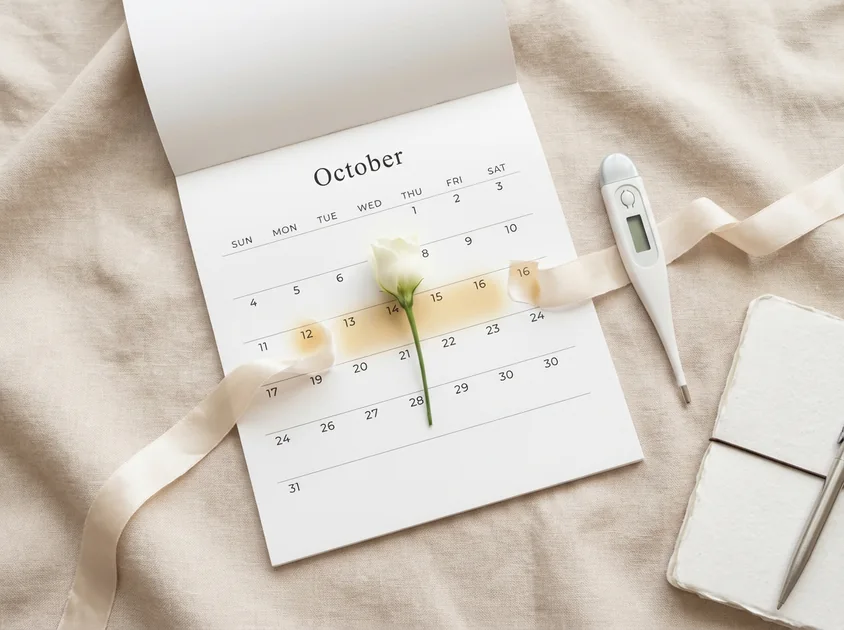
When planning a pregnancy, the question "why isn't it happening yet?" can become a source of stress for many couples. In reality, even for healthy couples, it can take several months to achieve pregnancy. The main secret here is "correct timing".
A woman's body is capable of becoming pregnant only a few days a month (approximately 5-6 days). This period is called the "fertile window," and its peak is the ovulation day. So, how can you catch this golden day? Let's learn how to calculate ovulation using scientific and natural methods.
What is ovulation and when does it occur?
Ovulation is the process where a mature egg cell is released from the ovary and enters the fallopian tube. At this time, the egg is ready to meet a sperm and be fertilized.
Short lifespan: The egg cell lives for only 12-24 hours. If fertilization does not occur during this period, it dies.
Strength of sperm: Sperm can live in a woman's body for up to 3-5 days.
Result: The highest chance of pregnancy occurs during sexual intercourse 3 days before ovulation and on the day of ovulation itself.
Myth: "Ovulation always happens on the 14th day, right in the middle of the cycle."
Truth: This is only for women with an ideal 28-day cycle. Every woman's cycle is different, and the ovulation day can vary.
>
4 main methods to calculate ovulation
1. Calendar method (Simplest, but least accurate)
This method works if your menstrual cycle is regular.
Formula: Ovulation usually occurs 14 days before the start of the next period.
Example: If your cycle is 30 days: 30 - 14 = 16. This means ovulation occurs approximately on the 16th day.
Anacan help: Don't waste time calculating by hand. Simply record the first day of your last period in the Anacan app, and the smart algorithm will calculate the fertile days for you.
2. Ovulation tests (Most accurate home method)
These tests, sold in pharmacies, are similar to pregnancy tests but look for a different hormone: Luteinizing Hormone (LH). LH levels rise sharply 24-36 hours before ovulation.
How to use: During the approximate ovulation week, take a urine test every day at the same time (preferably in the afternoon). If you see two dark lines, ovulation will occur within the next 24 hours. This is the most ideal time for intercourse!
3. Basal Body Temperature (BBT)
This method requires patience and discipline, but it is excellent for getting to know your body.
Rule: Measure your temperature every morning before getting out of bed and without making any movement (even drinking water).
Sign: Immediately after ovulation, your temperature rises by approximately 0.3 - 0.5 degrees due to the effect of the progesterone hormone and remains high until your period.
Note: This method shows that ovulation has occurred (it might already be late), but after tracking for a few months, you will find your own pattern.
4. Cervical mucus (Discharge) method
Your body gives you the clearest sign in your underwear.
Dry period: Immediately after menstruation.
Sticky: As ovulation approaches.
Like "egg white": On the day of ovulation, the discharge becomes clear, slippery, and stretchy (you can stretch it between your fingers). This fluid facilitates the movement of sperm and indicates the most fertile period.
Additional tips to increase the chance of getting pregnant
In addition to calculating the right day, small changes you make in your lifestyle can also make a big difference:
Reduce stress: Cortisol (the stress hormone) can delay or completely stop ovulation. Yoga, meditation, or simply doing what you love will protect your hormonal balance.
Healthy weight: Both excess weight and being underweight affect hormones.
Nutrition: Stay away from trans fats, increase plant-based proteins (lentils, chickpeas), and don't forget folic acid intake.
Quit smoking: Smoking reduces ovarian reserve and worsens egg quality.
When to see a doctor?
If you are under 35 and pregnancy has not occurred despite 1 year of regular attempts.
If you are over 35 and there is no result within 6 months.
If your periods are very irregular (or absent altogether).
Knowing your ovulation day is your compass on the road to pregnancy. Learn your body's language, track the symptoms, but don't turn the process into a mechanical task. Maintaining a sense of love and intimacy is just as important as the result of an LH test.
Download the Anacan app and start recording your symptoms. We will remind you of the most suitable days and be by your side on this exciting journey.