
Pregnancy
How to Calculate Due Date? Why Last Menstrual Period (LMP) Matters
When will your baby be born? A detailed guide on the most accurate ways to calculate your due date, the importance of the Last Menstrual Period (LMP), and Naegele's rule. Use our due date calculator for precision.
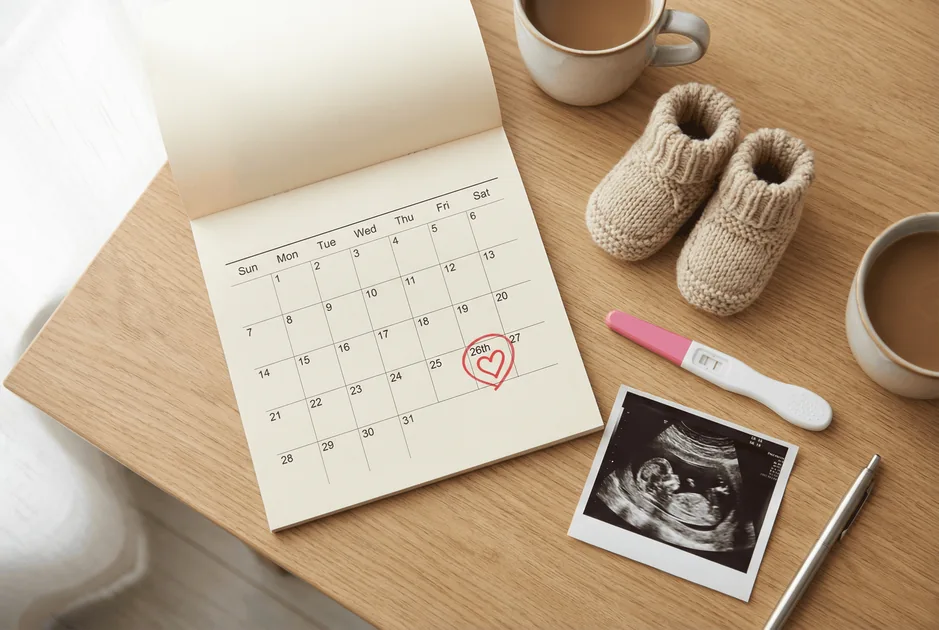
As soon as they see a positive result on a pregnancy test, the first question that comes to every future mother's mind is the same: "When will I hold my baby in my arms?"
Knowing this magical date is important not only for preparing the nursery or planning maternity leave, but also for medically monitoring the progress of the pregnancy. However, this date often causes confusion. Why do doctors calculate pregnancy from the date of the last period rather than the day of conception? How many months is 40 weeks actually?
Let's explain the logic behind these calculations and how you can find out the most accurate birth date in simple language.
Why is "Last Menstrual Period" (LMP) so important?
Many women try to calculate the week of pregnancy from the day they think conception occurred (the day of sexual intercourse). However, your doctor will always ask for the First Day of your Last Menstrual Period (LMP).
The reason for this is simple:
It is difficult to know the exact day: Conception may not occur on the day of intercourse. Sperm can live in the female body for up to 5 days. That is, if you had intercourse on Sunday, conception may have occurred on Wednesday.
Medical standard: The first day of the period is a precise reference point. In medicine, pregnancy is accepted as 40 weeks (280 days) and this period is calculated starting from the LMP.
This means that in the first two weeks of your pregnancy, you are technically not pregnant yet! Your body is simply preparing for ovulation.
How is the due date calculated? (Naegele's Rule)
The most popular formula used by doctors (and our app) is Naegele's Rule. You can easily calculate this yourself:
Formula: First day of your last period + 7 days - 3 months + 1 year.
>
Example:
Suppose the first day of your last period was November 1, 2025.
Add 7 days: November 8.
Go back 3 months: August 8.
Add 1 year: August 8, 2026.
Estimated Due Date: August 8, 2026.
This method works quite accurately for women with a regular 28-day menstrual cycle.
What if your cycle is irregular?
If your menstrual cycle is shorter or longer than 28 days (for example, 35-40 days), Naegele's rule may be slightly inaccurate. In such cases, the most reliable method is an Early Ultrasound Scan (USG).
Dating Scan: An ultrasound performed between the 8th and 13th weeks of pregnancy determines the pregnancy week with the highest accuracy (with an error of 3-5 days) by measuring the baby's crown-rump length (CRL).
If there is a difference of more than 7 days between the ultrasound date and your calculated LMP date, the doctor usually takes the ultrasound date as the basis and adjusts the due date ("corrected date").
The due date is an estimate, not a "deadline"!
Knowing this will save you from unnecessary stress: only 4-5% of women give birth on the calculated day.
Even if your baby is born:
2 weeks early (38th week) or
2 weeks late (42nd week),
it is considered a completely normal and full-term birth.
The due date just gives you a "target window." The baby may have their own plans!
Make it easier with the Anacan App
Don't waste time holding a calendar and counting days. The "Due Date Calculator" in the Anacan app takes care of everything for you.
Download the app.
Enter the first day of your last period.
The system will immediately show you the estimated due date, which week you are currently in, and your baby's zodiac sign.
Knowing the due date is important for monitoring your pregnancy, performing screening tests on time, and evaluating the baby's development. However, do not look at this date as an "exam day." Your baby will come when they are ready.
Your task is to enjoy every moment of this 40-week journey and listen to your body. Wishing you a healthy delivery!