Baby care
Newborn Baby Care: Everything You Need to Know (Bathing and Cord Care)
First days home after the maternity hospital: How to care for a baby's umbilical cord? Rules for the first bath, diaper changes, and skin care. A step-by-step guide for young mothers.

The moment you leave the maternity hospital and enter your home with that little "bundle" in your arms... This is both the happiest and most terrifying moment in the world. The nurses at the hospital did everything, but what now? The baby looks so small and delicate that you are even afraid to touch them. Questions like "Will I hurt their belly button?", "Is the water too hot?", or "Did I dress them correctly?" swirl in your mind.
Dear mother (and father), stay calm. Babies are more resilient than you think. In this article, we will explain the basic knowledge you will need most in the first days—hygiene, bathing, and umbilical cord care—in simple and clear language.1. Umbilical Cord Care: Don't be afraid to touch!
The umbilical cord stump of a newborn is the part that worries parents the most. It usually dries up and falls off on its own 10-21 days after birth. Until then, the main rule is to **"Keep it Clean and Dry"**.Golden Rules: - **Do not apply alcohol or Zelyonka (Brilliant Green):** Modern pediatrics does not recommend this. These substances can burn the skin and delay the healing process. Wiping with just boiled water and sterile gauze is sufficient.
- **Fasten the diaper below the navel:** Fold the edge of the diaper so the umbilical cord remains exposed to the air. Air exposure speeds up the drying process.
- **Bathing is allowed:** You can bathe the baby before the umbilical cord falls off; just make sure to dry that area carefully and completely after the bath.Warning Signs (When to call the doctor?): - If there is redness and swelling around the navel.
- If there is a foul-smelling or purulent discharge.
- If the baby cries when the navel is touched.2. The First Bath: Introduction to Water
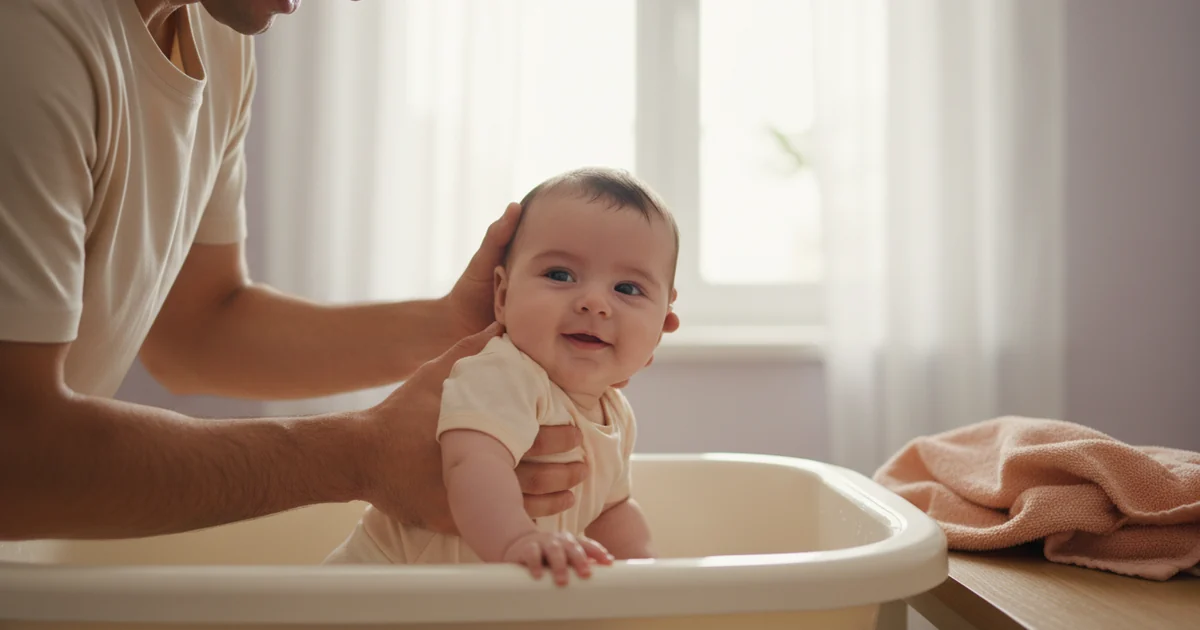
You don't need to bathe your baby every day (2-3 times a week is enough), but in our culture, a daily wash (especially in the evenings before sleep) is a tradition and is beneficial for calming the baby.Preparation:
The room temperature should be **24-26°C**, and the water temperature should be **37°C** (body temperature). To check the water temperature, dip your elbow into the water—it should be neither hot nor cold.Step-by-Step:1. **Safety:** Keep all supplies (towel, soap, diaper) within reach. Never leave the baby alone in the water\!
2. **Slowly:** Do not plunge the baby into the water suddenly. Lower the feet first, then the body. Support the head and neck with your arm.
3. **Face and Head:** Wash the face with clean water without soap. Wipe the eyes from the inside out. Wash the head with a special baby shampoo (tear-free).
4. **Body:** Don't forget to wash the armpits, neck folds, and between the fingers.Myth: "Salt should be added to the water until the baby is forty days old."
Truth: Salty water can dry out and irritate the baby's delicate skin. Regular tap water (if clean) or boiled water is best.3. Diaper Changes and Preventing "Diaper Rash"
A baby's skin is very sensitive. Diaper rash occurs when moisture and stool stay in contact with the skin for a long time. - **Change frequently:** Change the baby's diaper every 2-3 hours or immediately after every bowel movement.
- **Wash, don't wipe:** Whenever possible, wash the baby's bottom under running water instead of using wet wipes. Wipes (even the most expensive ones) can cause irritation.
- **Air bath:** Before putting on a new diaper, leave the baby's bottom uncovered for 5-10 minutes so the skin can breathe.
- **Cream:** Use protective creams containing zinc (Sudocrem, Desitin, etc.). The use of powder (talc) is no longer recommended (it can enter the respiratory tract).4. Skin Care: Peeling and Rashes
In the first weeks, you may see peeling (flaking) or small pimples on the baby's skin. - **Peeling:** This is normal. The baby has been in water for 9 months and is now coming into contact with air. You can apply moisturizing baby oil or lotion.
- **Hormonal Acne:** Small red rashes (neonatal acne) may appear on the face. This is related to hormones passed from the mother and clears up on its own without requiring treatment. Do not squeeze them\!5. Ears, Nose, and Nails - **Ears:** Never insert a cotton swab into the ear canal\! Just wipe the outside.
- **Nose:** Nasal congestion prevents the baby from sucking. You can clean it with sea water drops and an aspirator.
- **Nails:** Babies tend to scratch their own faces. Cut their nails with special baby scissors while they are sleeping. You can use mittens for the first few days.The first days may seem difficult, but believe me, your hands will get used to it very quickly. You are the best specialist for your baby. Trust your instincts and don't hesitate to ask for help (from your spouse, your mother).
Download the **Anacan app** to track your baby's sleep schedule, nutrition, and weight gain. We are with you during your first year\!