
Pregnancy
Teething Period: Natural and Safe Ways to Soothe Your Baby's Pain
When does the teething period start in infants? A guide for mothers on Anacan regarding swollen gums, insomnia, and natural, safe methods to alleviate pain.

Your baby's sweet and toothless smile may one day be replaced by unexplained crying, irritability, and a desire to put everything in their mouth. Do not let the disruption of night sleep and your baby's constant restlessness sadden you; most likely, they are experiencing one of the most important physical development stages of their life – the teething period.
This process can be quite exhausting and long-term for both the baby and the parents. This is because the emergence of a small, sharp bone (the tooth) through the sensitive gums is a painful experience. So, when does this process begin, what are the symptoms, and most importantly, how can you relieve your baby's pain naturally? Let's look at the scientific answers to these questions.
1. When does the teething process begin?
The timing of the first tooth's appearance depends heavily on genetic factors. If you or your spouse had teeth early or late as babies, your baby will likely follow the same genetic line.
Average indicator: In most babies, the first teeth (usually the lower central incisors) begin to appear starting from the 6th month.
Early and late cases: Some babies may have their first tooth at 3-4 months old, while for others, this process may be delayed until 12 or even 14 months. Both cases are considered completely normal by pediatricians. Late teething does not mean the baby is experiencing a calcium deficiency.

2. How to know if they are teething? Main symptoms
Movement in your baby's gums can begin weeks before the tooth itself becomes visible. If you observe the following symptoms in your baby, it means the first tooth is on its way:
Excessive drooling (Salivation): If the collar of their clothing is constantly wet, this is a classic sign of teething. (Note: Drool can cause rashes on the chin and neck, so it is important to keep these areas dry).
Desire to bite everything: To reduce the itching and pressure in the gums, the baby constantly tries to bite their fingers, toys, or even their mother's shoulder.
Swollen and reddened gums: The area where the tooth will emerge may appear bulging, red, and sometimes slightly bruised.
Sleep disturbance and loss of appetite: Because the pain increases at night, the baby wakes up frequently. They may refuse complementary foods because solid foods cause pain when touching the gums (it is normal to want more breast milk or liquids during this period).
(Important note: Teething does not cause high fever (above 38.5°C) or severe diarrhea. If these symptoms are present, do not attribute them to teething and be sure to consult a doctor).

3. Natural and safe methods to relieve pain
During this period, what your baby needs most are natural interventions that will reduce that uncomfortable pressure in their gums:
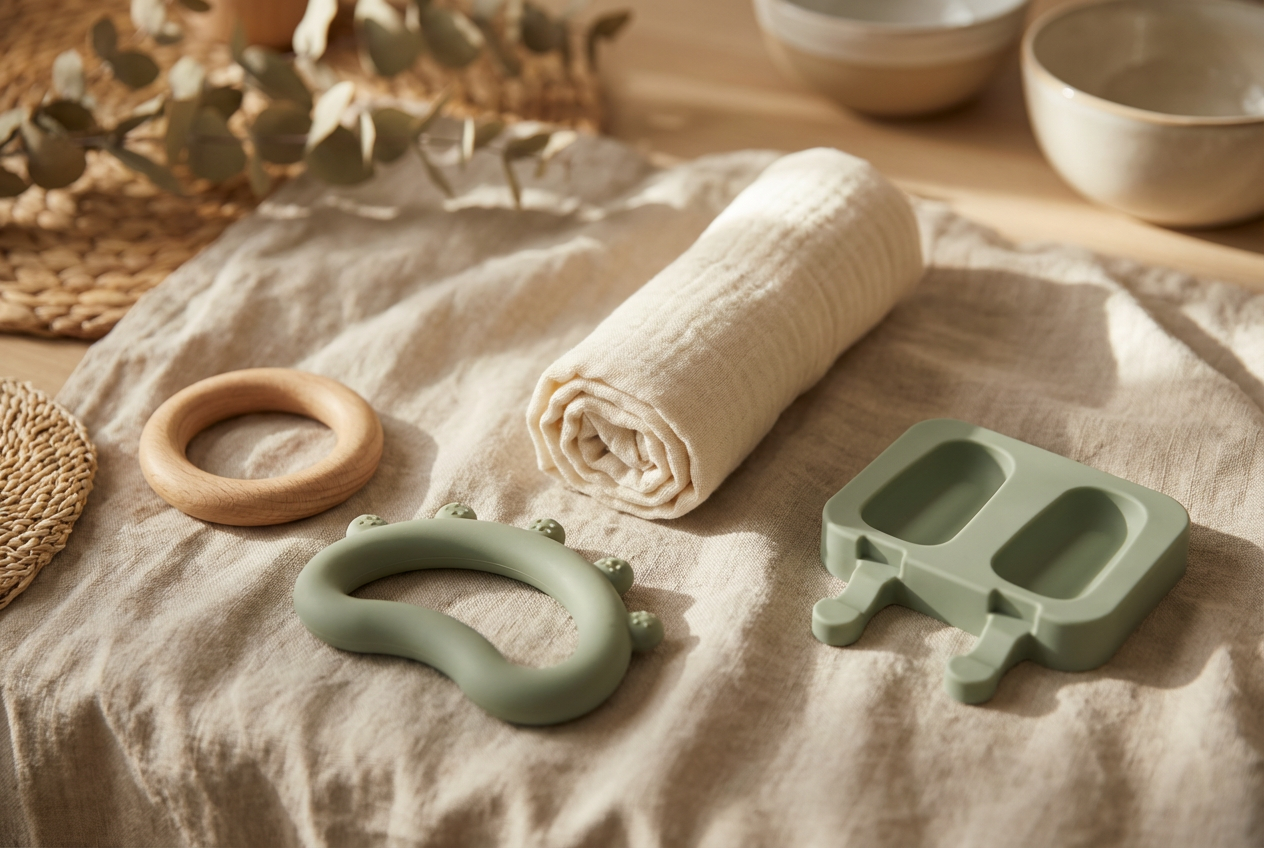
Cold compresses: Cold is the best natural remedy to reduce inflammation and pain. Wet a clean cotton cloth (e.g., a muslin cloth), cool it slightly in the refrigerator (not the freezer), and give it to your baby to chew.
Gum massage: After washing your hands thoroughly, use your finger to massage the baby's swollen gums with light, circular pressure. This provides them with incredible relief.
Breast milk popsicles: If your baby has started complementary foods, you can freeze breast milk or fruit puree in special silicone popsicle molds (or fruit feeders). This cold and tasty remedy both numbs the gums and nourishes them.
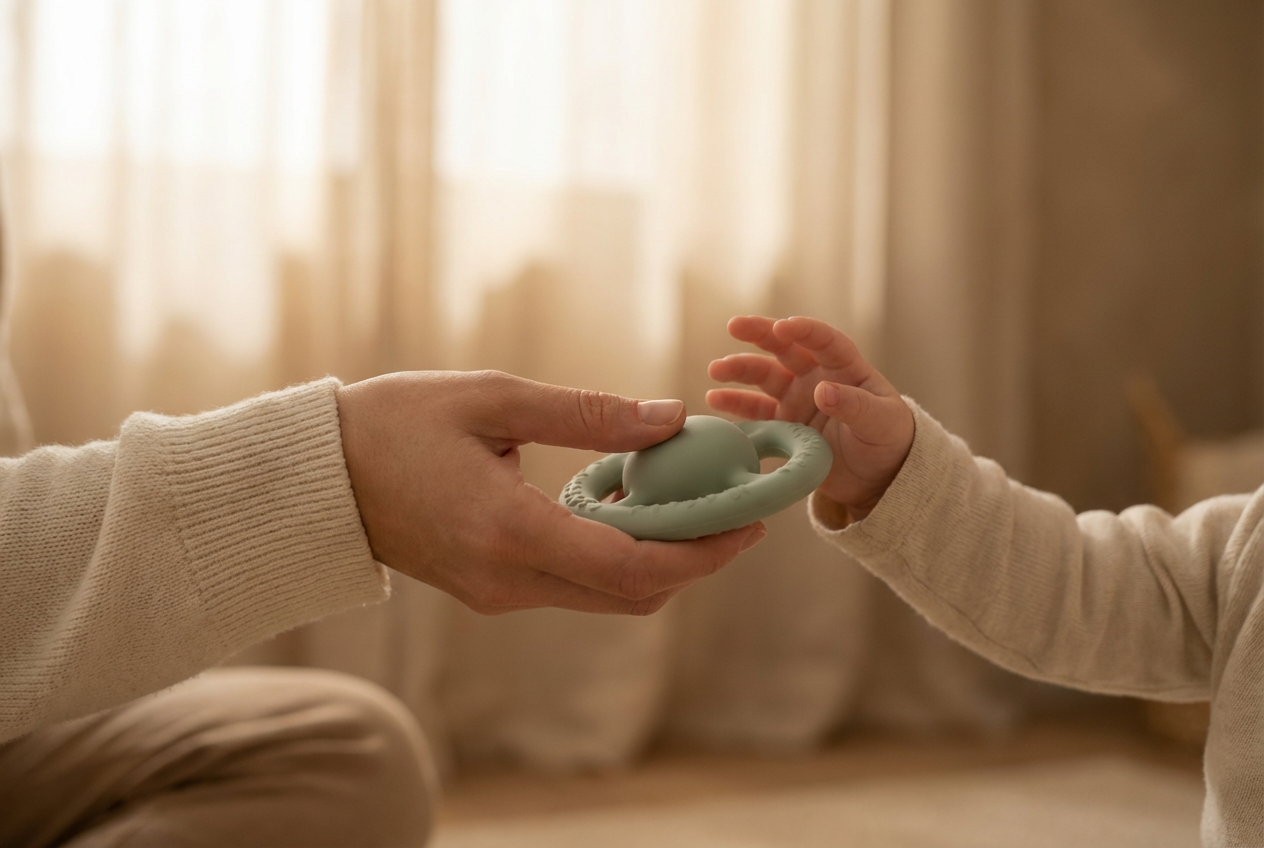
Safe teethers: Use teethers made of completely natural silicone or smooth wood that are not filled with liquid and can be cooled in the refrigerator.
4. What should be avoided at all costs?
While trying to reduce the baby's pain, there are some popular but dangerous practices that can unintentionally cause harm:
Amber necklaces: There is no scientific evidence that these necklaces relieve pain. On the contrary, experts strictly do not recommend them due to the risk of beads breaking off and entering the baby's airway (choking) or becoming tangled around the neck.
Teething gels containing Benzocaine: Some gels that numb the gums can dangerously lower the oxygen levels in a baby's blood. Stay away from these types of chemical gels unless prescribed by your doctor.
Hard objects frozen in the freezer: Only cool teethers in the main compartment of the refrigerator. Objects frozen in the freezer can cut or damage (frostbite) the baby's sensitive gums.
Navigate this difficult period more easily with Anacan
Although the teething period is tiring, it is the most beautiful proof of your baby's healthy growth. Do not forget to track teething symptoms, record that exciting moment when the first white pearl appears in the "Teething" section of the Anacan app, and take advantage of care tips. In difficult moments, by benefiting from the experiences of other mothers in the Anacan community, you can turn this stage into a more peaceful and calm process for both yourself and your baby.