
Pregnancy
When Should You Take a Pregnancy Test? Golden Rules for Accurate Results
When should you take a pregnancy test? Should I wait for a missed period or can I check earlier? Everything you need to know about the best time of day for accurate results and the hCG hormone.
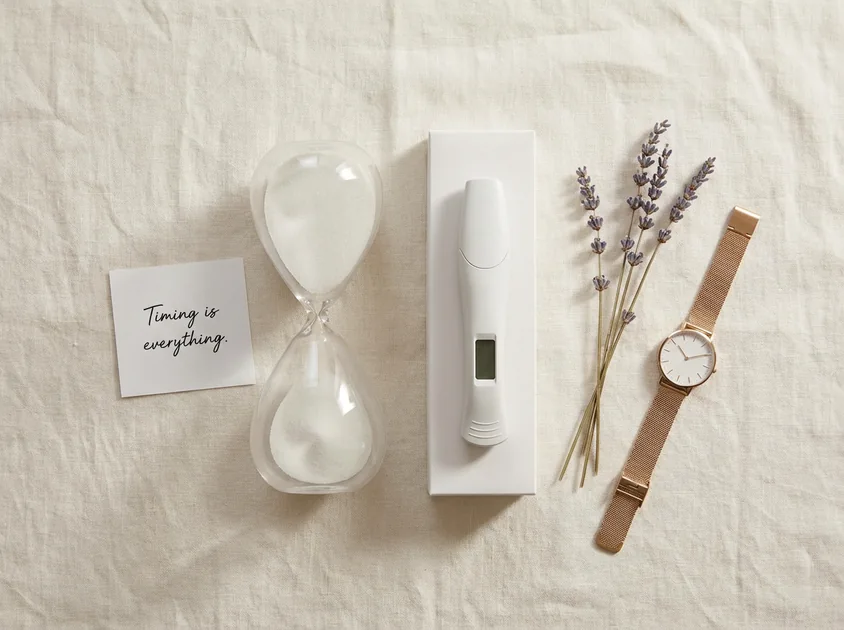
When you are trying to get pregnant or suspect you might be, "waiting" can seem like the hardest job in the world. Every time you enter a pharmacy, you look at those little boxes on the shelf and think, "maybe I should check now?" However, rushing can often lead to disappointment – a "false negative" result or unnecessary stress.
But when is the ideal time to see those two magic lines? Does it matter whether you take the test in the morning or evening? In this article, we have gathered all the truths about pregnancy tests to save your money and your nerves.
How do pregnancy tests work? (hCG Hormone)
To understand when a test should be taken, you first need to know what it is looking for. All home pregnancy tests work by detecting a specific hormone in the urine called hCG (Human Chorionic Gonadotropin).
Process: After a fertilized egg attaches to the uterine wall (implantation), the placenta begins to secrete this hormone.
Duration: hCG levels double every 2-3 days. However, the hormone must reach a certain concentration for the test to be able to "see" it.
If you take the test too early, even if you are pregnant, the hCG level may not have reached the test's sensitivity threshold yet. Result? One line and unnecessary sadness.
The right time to take the test
The main rule here is to be patient. Two main approaches exist:
1. Most accurate result: After a missed period
Most doctors and test manufacturers recommend waiting for a missed period (at least 1 day past the expected date).
Reason: During this period, hCG levels in most women reach a level that standard tests can detect. At this time, the accuracy of tests is close to 99%.
2. For the impatient: Before the delay (Early tests)
Some "Early Detection" tests claim to show results 4-5 days before your period. These tests are more sensitive (they catch hCG at lower amounts).
Risk: If you get a negative result, it does not mean you are not pregnant. It might just be too early. In this case, you should check again a few days later.
What time of day is better? Morning or Evening?
The idea that "you must take the test in the morning" is not just a myth, but a recommendation with a scientific basis.
First morning urine: Because it has collected overnight, it has the highest concentration. The hCG hormone is most dense here. Taking a morning test is essential in the early stages (before a delay or on the day of the delay).
Afternoon and Evening: If your period is already 1-2 weeks late, the hCG level is so high that you can take the test at any time of day.
Important note: Drinking excessive water or tea before the test dilutes the urine and reduces the hCG concentration. This can lead to a false negative result.
>
False Negative and False Positive results
Sometimes tests can deceive us. It is important to know the reasons for this:
False Negative (You are pregnant, but the test says "no")
Reason 1: You took the test too early (the most common reason).
Reason 2: The urine was too diluted (you drank too much water).
Reason 3: The test has expired.
False Positive (You are not pregnant, but the test says "yes")
This is much rarer, but possible:
Chemical pregnancy: Fertilization occurred, but the embryo did not develop.
Evaporation line: A faint, gray-colored line that appears after the time given to check the test (usually 5-10 minutes) has passed. This is not a positive result.
Certain medications: Infertility drugs containing hCG can affect the result.
When should a blood test (hCG) be given?
If home tests have confused you or you want a more accurate result, a blood test is the most reliable way.
A blood test detects hCG earlier (7-10 days after fertilization) and more accurately than a urine test.
This analysis also shows the exact amount of the hormone (beta-hCG), allowing you to track which week of pregnancy you are in and whether development is proceeding normally.
5 Golden Rules for an Accurate Result
When using a home pregnancy test, be sure to follow these steps:
Check the date: Always check the expiration date when buying a test. Old tests give incorrect results.
Read the instructions: Rules may differ for every brand (e.g., the duration it should stay in the urine).
Wait for the morning: For the most accurate result, use the first urine as soon as you wake up in the morning.
Keep time: Look at the result within the time interval indicated in the instructions (e.g., after 3-5 minutes). Do not believe lines that appear after 10 minutes.
Repeat: If the result is negative but your period still hasn't come, repeat the test 2-3 days later.
Taking a pregnancy test is an exciting moment, and waiting for the result can feel like an eternity. The best strategy is to give nature a little time and at least wait for the day of your period.
If the result is positive, congratulations! A wonderful journey awaits you. Now the next step is to book a doctor's appointment and download the Anacan app to track your baby's development week by week. If the result is negative, don't lose heart; maybe it's just still too early.