
Pregnancy
Taking Medication During Pregnancy: What to Know About Paracetamol and Antibiotics
Which medicines can you take during pregnancy? Is paracetamol safe? Essential information on antibiotic use, risks of ibuprofen, and FDA categories. A medication guide to protect yourself and your baby.
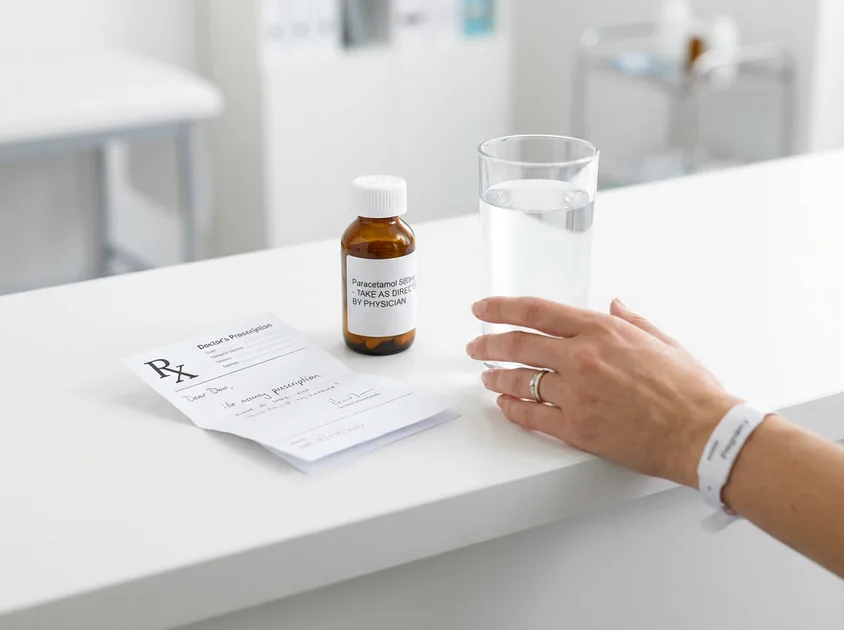
Before pregnancy, when we had a headache or felt a cold coming on, our hand would reach for the medicine cabinet without thinking. However, after receiving the news of pregnancy, the situation changes. Now we look at every pill as a "potential enemy."
On one hand, there is unbearable pain or high fever, and on the other hand, the fear: *"If I take medicine, will it harm my baby?"* This dilemma leaves many expectant mothers helpless. Sometimes the fear is so strong that women even refuse essential treatments prescribed by a doctor.
So, where does the truth lie? Which medicines are a "green light" and which are strictly "prohibited"? Let's look at the medical facts about the most commonly used medications during pregnancy.The Golden Rule: Say NO to self-medication!
Before starting the article, let's recall the most important rule: **Do not take any medication (even herbal ones) during pregnancy without consulting your doctor.** A medicine that worked well for a neighbor may not be suitable for your week of pregnancy or your condition.Paracetamol: The "Savior" of Pregnant Women
The most recommended medication for pain relief and fever reduction during pregnancy is **Paracetamol** (Panadol, Efferalgan, etc.).Why is it considered safe?
Medical research shows that when taken in recommended doses, paracetamol does not negatively affect fetal development. Although it crosses the placenta, it has no toxic effects.When should it be taken? - **High fever:** A fever above 38°C during pregnancy is more dangerous for the baby than the medication itself. High fever can speed up the fetus's heart rate and damage protein structures. Therefore, it is **essential** to reduce the fever with paracetamol.
- **Pain:** Instead of enduring head, tooth, or muscle pain, taking paracetamol is better for reducing stress hormones.Attention: Even though it is safe, it should not be taken "like candy." Use the lowest possible dose for the shortest possible duration.Antibiotics: Friend or Foe?
The idea that "antibiotics are harmful" is deeply rooted in our society. However, untreated infections during pregnancy (e.g., kidney infection, pneumonia, sexual infections) are far riskier for the baby than antibiotics. Infection can lead to premature birth, premature rupture of membranes, and fetal growth restriction.
Doctors prescribe only **safe group** antibiotics to pregnant women:
✅ **Approved Antibiotics:** - **Penicillin group:** (e.g., Amoxicillin, Ampicillin). This is the most widely used and safest group.
- **Macrolides:** (e.g., Erythromycin, Azithromycin). Prescribed for those with penicillin allergies.
- **Cephalosporins:** (e.g., Cephalexin).❌ **Prohibited Antibiotics:** - **Tetracyclines:** Impair the baby's bone development and cause permanent yellow staining on teeth.
- **Streptomycin:** Can damage the fetus's auditory nerve (risk of deafness).
- **Chloramphenicol:** Can cause "Gray Baby Syndrome."**Conclusion:** If your doctor has prescribed an antibiotic, it means the benefit far outweighs the risk. Be sure to complete the course.Ibuprofen and Aspirin: Why should we be careful?
One of the most popular medications for headaches, **Ibuprofen (Nurofen)**, and other non-steroidal anti-inflammatory drugs (NSAIDs) are **prohibited during pregnancy, especially in the 3rd trimester (after the 28th week)**. - **Risk:** These drugs can cause an important vessel in the baby's heart (Ductus Arteriosus) to close prematurely, which creates serious heart and lung problems. It can also lead to a decrease in amniotic fluid (oligohydramnios).
- **Aspirin:** Can only be taken if prescribed by a doctor in a specific dose (e.g., "Cardioaspirin" against the risk of preeclampsia). Self-use as a painkiller creates a risk of bleeding.What to do during Cold and Flu?
"Packet powders" purchased from the pharmacy (Teraflu, Fervex, etc.) during seasonal illnesses are not suitable for pregnant women because they contain vasoconstrictors.
**Safe alternatives:** - **For nasal congestion:** Sea water sprays (Aquamaris, etc.) are completely safe. Drops containing Xylometazoline can only be used with doctor's permission for a short period (max. 3 days).
- **For sore throat:** Gargling with salt water, warm milk, and honey.
- **For cough:** Herbal syrups (with a doctor's prescription).Drug Categories in Pregnancy (FDA)
You may come across these letters when reading a medicine box. This is the classification by the US Food and Drug Administration (FDA): - **Category A:** Tested on humans, completely safe (e.g., Folic acid).
- **Category B:** Harmless in animals, insufficient research in humans, but considered safe (e.g., Paracetamol, Amoxicillin).
- **Category C:** Shown negative effects in animals, data in humans is scarce. Used only if benefits outweigh risks.
- **Category D:** Risk to the human fetus is proven. Used only in life-threatening situations.
- **Category X:** Strictly prohibited (Teratogenic). Causes serious harm to the fetus.Pregnancy does not mean remaining "defenseless" against illnesses. Modern medicine provides us with enough safe tools to both heal the mother and protect the baby.
If you are hesitant about taking any medication, download the **Anacan app**. You can instantly check the status of hundreds of medicines during pregnancy (Green/Yellow/Red) in the "Safety Lookup" section of the app.
Stay healthy so that your baby grows up healthy too!