
Pregnancy
Exercise During Pregnancy: Safe Activities and Exercises to Avoid
Is it dangerous to exercise during pregnancy? Benefits of yoga, swimming, walking, and Kegel exercises. Which sports pose a risk of miscarriage or injury? A safety guide for pregnant women.
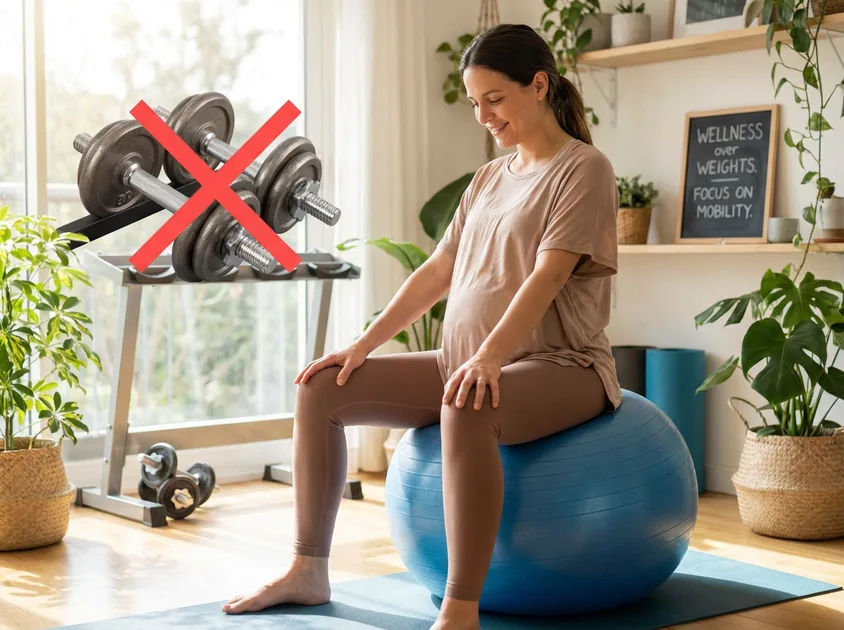
After finding out you are pregnant, the first advice from those around you was probably: *"Protect yourself, do not lift heavy, do not move too much, lie down and rest\!"*. In our grandmothers' time, pregnancy was almost treated as a disease, and inactivity was recommended to women.
However, modern medicine has completely changed this approach. We now know that "spending 9 months lying on the couch" is actually harmful to both mother and baby (unless there are specific medical indications). Movement is life, and this holds true during pregnancy as well.
But where is the limit? Which movements are beneficial, and which are dangerous? Let’s turn on the "green" and "red" lights regarding exercise during pregnancy together.Why should you exercise during pregnancy? (Benefits)
If your pregnancy is proceeding without risks (normal), regular exercise will provide you with the following amazing benefits:1. **Preparation for birth:** Birth is a marathon that requires great physical strength. Exercise trains your muscles and heart for this marathon.
2. **Weight control:** It prevents excessive weight gain and makes it easier to get back in shape after birth.
3. **Reduction of pain:** It reduces back and waist pain, as well as constipation and bloating.
4. **Mood:** Endorphins (happiness hormones) released during exercise reduce stress and improve sleep.
5. **Risk of gestational diabetes:** It helps regulate blood sugar.Green Light: Which types of exercise are safe? ✅
These sports are considered the "gold standard" for pregnant women because the risk of trauma is minimal and they do not excessively raise the heart rate.1. Walking
It is the simplest, free, and safest exercise. It requires no special equipment. - **Rule:** Walking for 20-30 minutes a day in the fresh air is sufficient. Make sure you wear comfortable shoes.2. Swimming
It is considered the **most ideal** sport for pregnant women. - **Why?** Water "takes" your body weight, reducing the load on your joints and back. It eliminates swelling (edema) and cools you down.3. Prenatal Yoga and Pilates
Programs specially prepared for pregnant women keep the body flexible, teach breathing techniques (which will be very necessary during birth!), and calm the mind. - **Attention:** Make sure your instructor has a certificate for working with pregnancy.4. Kegel exercises
This is an "invisible" exercise that strengthens the pelvic floor muscles. - **Benefit:** It helps prevent tears during birth and solve urinary incontinence problems after birth. You can do it anywhere (even while sitting).Red Light: What is strictly forbidden? ❌
Pregnancy is not the time to "break records." The following activities can harm the fetus:1. Sports with a risk of falling
During pregnancy, your center of gravity changes and it becomes difficult to maintain balance. - **Forbidden:** Skiing, horse riding, ice skating, intensive cycling (stationary cycling is okay).2. Contact sports
Stay away from anything where there is a possibility of a blow to your stomach. - **Forbidden:** Basketball, football, boxing, judo, wrestling.3. Exercises done lying on your back (after the 20th week)
After the 4th month of pregnancy, you should not do crunches or exercise while lying on your back. - **Reason:** The growing uterus compresses the main blood vessel (inferior vena cava), which causes dizziness and reduced blood flow to the baby.4. "Hot Yoga" and Sauna
Excessive increase in body temperature (hyperthermia) can negatively affect fetal development. Stay away from yoga done in a hot room.5. Jumping and Sudden movements
Your joints soften during pregnancy (thanks to the hormone relaxin). Sharp jumps or twists increase your risk of injury.Golden Rules: What to pay attention to during exercise?1. **"Talk test":** If you can speak comfortably while exercising, your pace is good. If you are out of breath and cannot speak, the pace is too high; slow down.
2. **Drink water:** Drink plenty of water before, during, and after exercise. Dehydration can cause uterine contractions.
3. **Warm-up and Cool-down:** Start movements slowly and end slowly.
4. **Doctor's permission:** Be sure to consult your doctor before starting exercise.When to stop immediately?
If you feel any of the following symptoms, stop exercising and call your doctor: - Vaginal bleeding or leaking fluid.
- Dizziness or blurred vision.
- Shortness of breath (even while resting).
- Chest pain.
- Pain or swelling in the calf.
- Regular and painful uterine contractions.Exercise during pregnancy is one of the best favors you can do for yourself and your baby. Your goal is not to be an "Olympic champion," but to stay healthy and energetic. Listen to your body, stop when you are tired, and enjoy the movement.
You can use the **Anacan app** to track your daily step count, water intake, and weight. Move with health\!